How Spaces and Agents Change Content Operations in Sitecore AI
Modern content operations are under pressure from every direction. Teams are expected to produce more content, localize faster, personalize experiences in real time, and still maintain governance across channels. Traditional CMS workflows were never designed for this level of operational complexity.
That’s where SitecoreAI introduces a major shift.
Instead of treating AI as a simple assistant embedded into the CMS, SitecoreAI rethinks how content teams organize work, automate decisions, and collaborate at scale through two foundational concepts: Spaces and Agents.
Together, they move content operations from static workflows into intelligent systems that can adapt, automate, and continuously optimize.
The Problem with Traditional Content Operations
Most enterprise content ecosystems still rely on fragmented processes:
- Strategy lives in documents
- Content creation happens in separate tools
- Approvals move through email or ticketing systems
- Localization is disconnected
- Optimization requires manual analysis
- Teams work in silos
The result is operational drag.
Even with strong CMS platforms, organizations often struggle with:
- Duplicate content production
- Slow campaign execution
- Inconsistent governance
- Poor reuse across regions
- Limited personalization velocity
- Burnout across content teams
AI alone does not solve this problem.
What changes the equation is operational intelligence.
That is exactly where Spaces and Agents become important.
What Are Spaces in SitecoreAI?
Spaces act as intelligent operational environments inside SitecoreAI.
Think of a Space as more than a workspace. It is a context-aware operating layer where content, AI behavior, governance, workflows, and business goals are grouped together.
A Space can represent:
- A brand
- A regional team
- A product line
- A campaign operation
- A business unit
- A customer segment
Each Space contains its own:
- Content rules
- AI instructions
- Permissions
- Taxonomy
- Tone guidelines
- Automation logic
- Connected systems
- Performance signals
This creates separation without fragmentation.
Instead of forcing one global AI model to behave the same way everywhere, Spaces allow organizations to create AI environments tailored to operational realities.
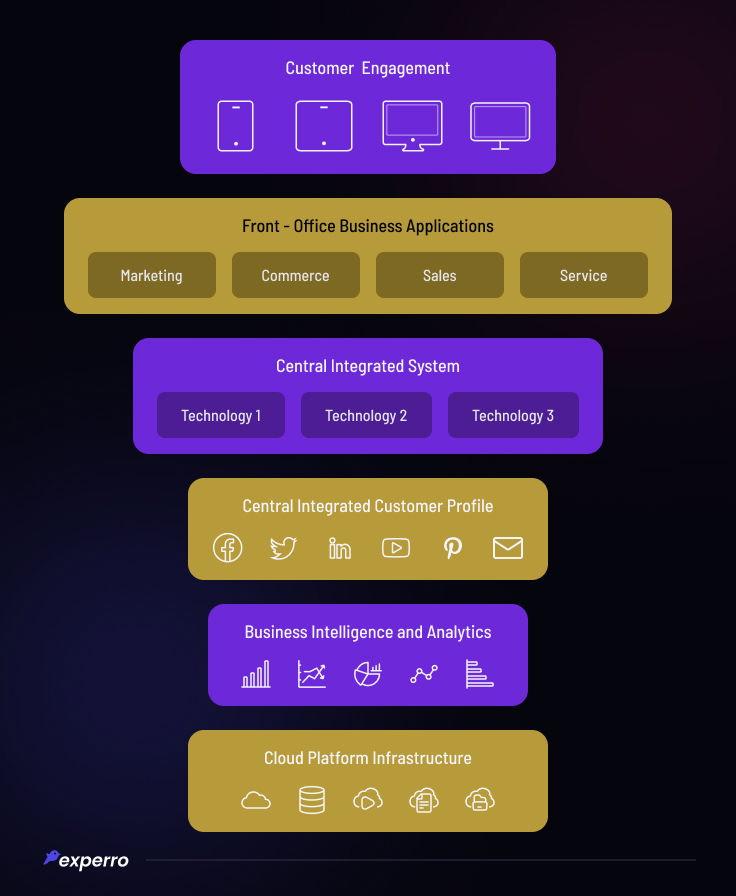
Why Spaces Matter Technically
From a systems architecture perspective, Spaces solves one of the biggest problems in enterprise AI adoption:
Context contamination.
Without operational isolation, AI systems can produce inconsistent outputs, break governance models, or lose alignment with business intent.
Spaces introduce scoped intelligence.
For example:
A global retail organization might have:
- A North American commercial space
- An EMEA localization Space
- A Healthcare Compliance Space
- A Product Launch Space
Each Space can operate with:
- Different prompts
- Different approval chains
- Different retrieval sources
- Different agent orchestration rules
- Different publishing policies
This makes AI operations modular instead of monolithic.
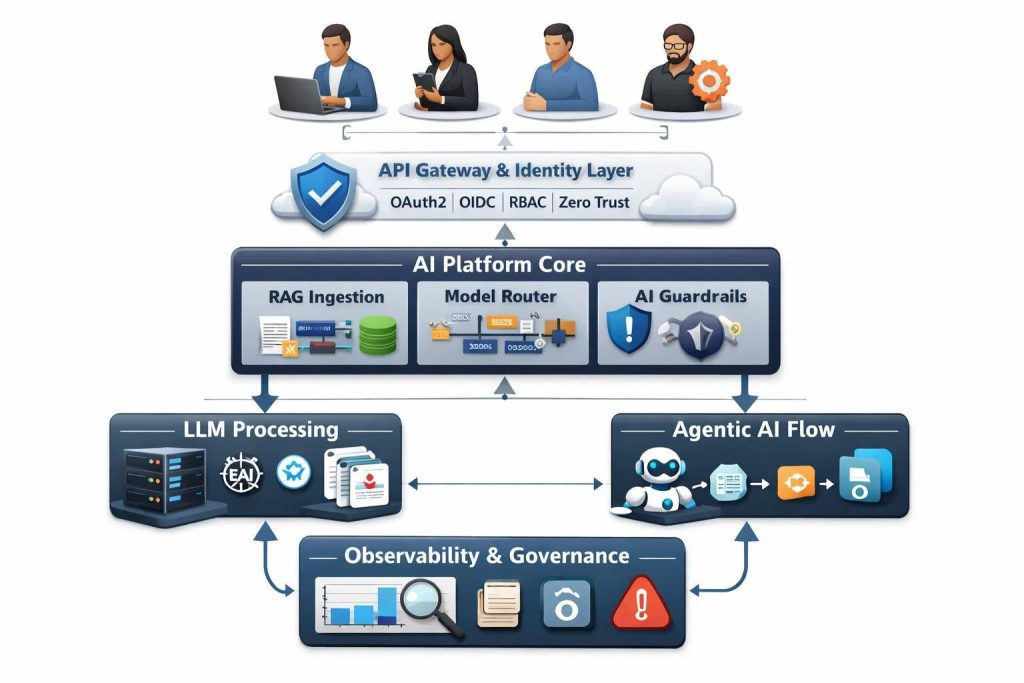
Agents: The Operational Layer of SitecoreAI
If Spaces define the environment, Agents define the execution.
Agents are autonomous or semi-autonomous AI components designed to perform specialized operational tasks.
Instead of one generalized AI assistant, SitecoreAI enables multiple targeted agents working together.
Examples include:
- Content generation agents
- SEO optimization agents
- Brand compliance agents
- Translation agents
- Metadata enrichment agents
- Personalization agents
- Analytics interpretation agents
- Workflow orchestration agents
Each agent operates with specific objectives, permissions, and contextual awareness.
This is a major architectural evolution compared to older CMS automation models.
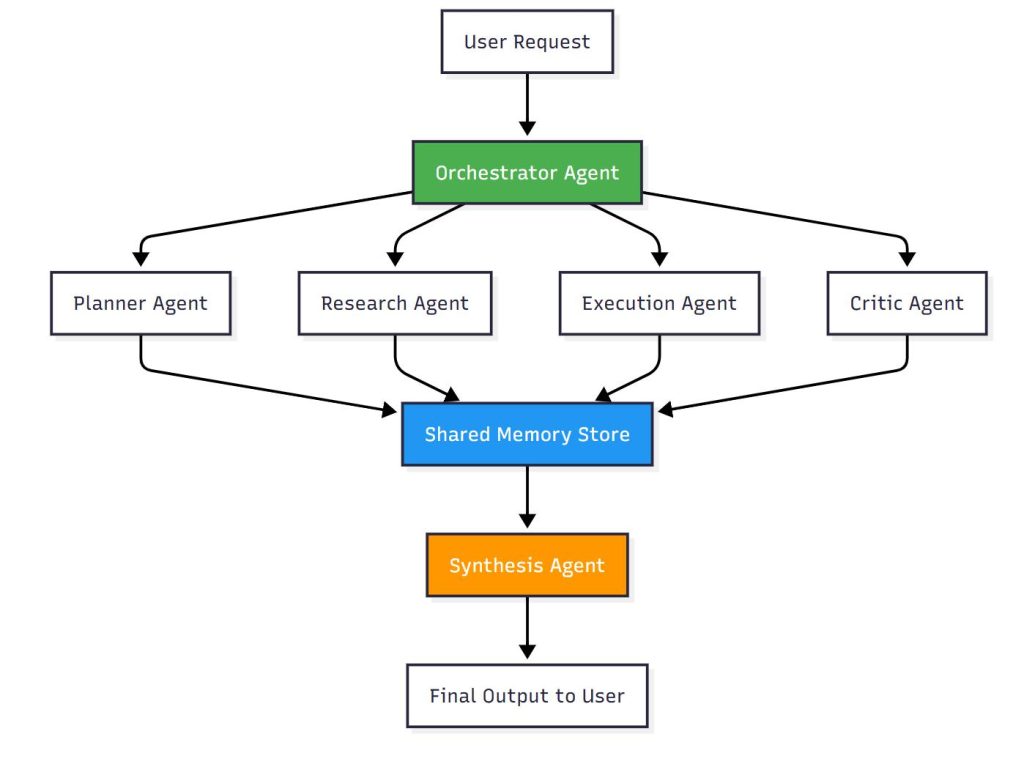
Agents Are Not Just Chatbots
This distinction matters.
A chatbot waits for prompts.
An operational agent participates in workflows.
That means agents can:
- Trigger actions automatically
- Analyze content states
- Monitor performance changes
- Coordinate with other agents
- Execute governance checks
- Recommend optimizations continuously
In practical terms, this changes how content teams work day-to-day.
Instead of manually coordinating dozens of repetitive operational tasks, teams supervise intelligent systems that automatically manage execution layers.

How Spaces and Agents Work Together
The real transformation happens when Spaces and Agents intersect.
A Space provides:
- Context
- Governance
- Operational boundaries
Agents provide:
- Automation
- Intelligence
- Execution
Together, they create a scalable AI-native operating model.
For example:
A Product Launch Workflow
Inside a dedicated product launch Space:
- A strategy agent analyzes campaign goals
- A content agent drafts landing page copy
- An SEO agent optimizes metadata
- A compliance agent validates messaging
- A localization agent prepares multilingual versions
- A personalization agent creates audience variants
- An analytics agent monitors engagement post-launch
- An optimization agent suggests improvements
None of these tasks requires isolated manual coordination.
The system orchestrates itself within the rules of the Space.
That is a significant operational leap.
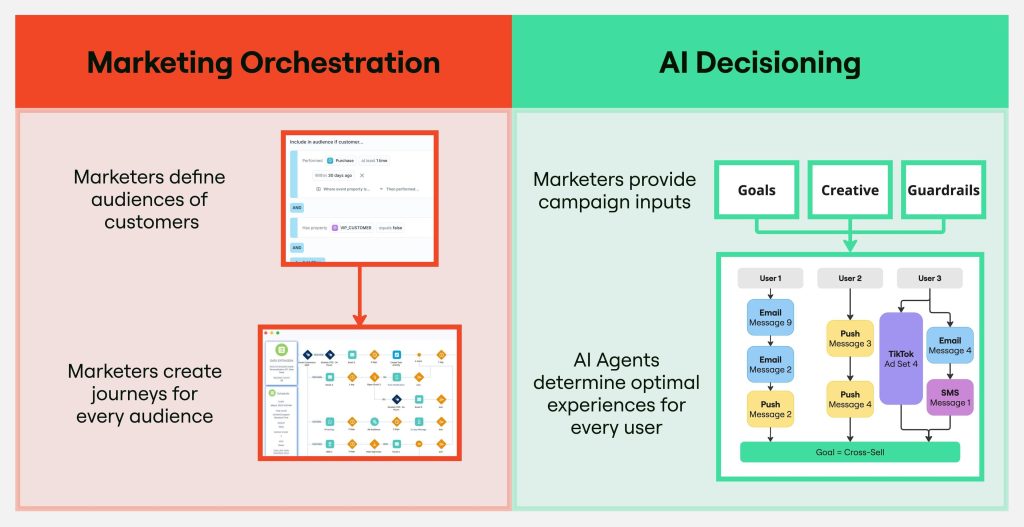
The Impact on Enterprise Content Teams
The introduction of Spaces and Agents changes team structures as much as technology stacks.
Traditional content operations rely heavily on centralized coordination.
AI-native operations shift toward:
- Distributed execution
- Policy-driven governance
- Intelligent automation
- Human supervision instead of manual production
This reduces operational friction across large organizations.
Content teams spend less time:
- Routing approvals
- Rewriting repetitive copy
- Managing taxonomy manually
- Coordinating localization
- Auditing brand consistency
And more time:
- Shaping strategy
- Refining customer experience
- Training AI systems
- Designing operational rules
- Measuring business outcomes
The human role becomes more strategic, not less important.
That distinction matters because successful AI adoption is rarely about replacing teams. It is about reducing operational inefficiency.
Governance Becomes More Scalable
One overlooked benefit of Spaces and Agents is governance scalability.
Enterprise organizations often struggle with balancing:
- Brand consistency
- Regional flexibility
- Regulatory compliance
- Content velocity
Traditional workflows usually force tradeoffs.
Spaces allow governance to become contextual.
For example:
A regulated healthcare Space can enforce:
- Strict approval chains
- Medical terminology validation
- Restricted publishing permissions
- Compliance-focused AI prompts
Meanwhile, a campaign experimentation Space can prioritize:
- Speed
- Variant generation
- Real-time optimization
- Rapid publishing cycles
This flexibility is difficult to achieve in rigid workflow systems.
SitecoreAI Signals a Shift Toward AI-Native CMS Operations
What SitecoreAI is introducing goes beyond content assistance.
It points toward a larger industry transition:
CMS platforms are evolving into intelligent operational systems.
That changes the role of content infrastructure entirely.
The future CMS is not just a repository.
It becomes:
- A coordination layer
- A decision engine
- A governance framework
- An orchestration platform for AI systems
Spaces and Agents are early indicators of that evolution.
Final Thoughts
Spaces and Agents fundamentally change how content operations scale inside SitecoreAI.
Spaces create structured intelligence boundaries.
Agents introduce autonomous operational execution.
Together, they transform content management from a manual publishing process into an adaptive AI-driven system.
For enterprise organizations managing high-volume, multi-channel experiences, this model offers something traditional CMS workflows struggle to deliver:
- Operational speed
- Governance consistency
- Intelligent automation
- Scalable personalization
- Cross-functional coordination
The biggest shift is not technological.
It is operational.
Content teams are no longer just managing pages and workflows.
They are managing intelligent systems capable of executing content operations at enterprise scale.