Sitecore Symposium 2026: Marketing Rewired, MarketingIQ and the Developer MCP Era
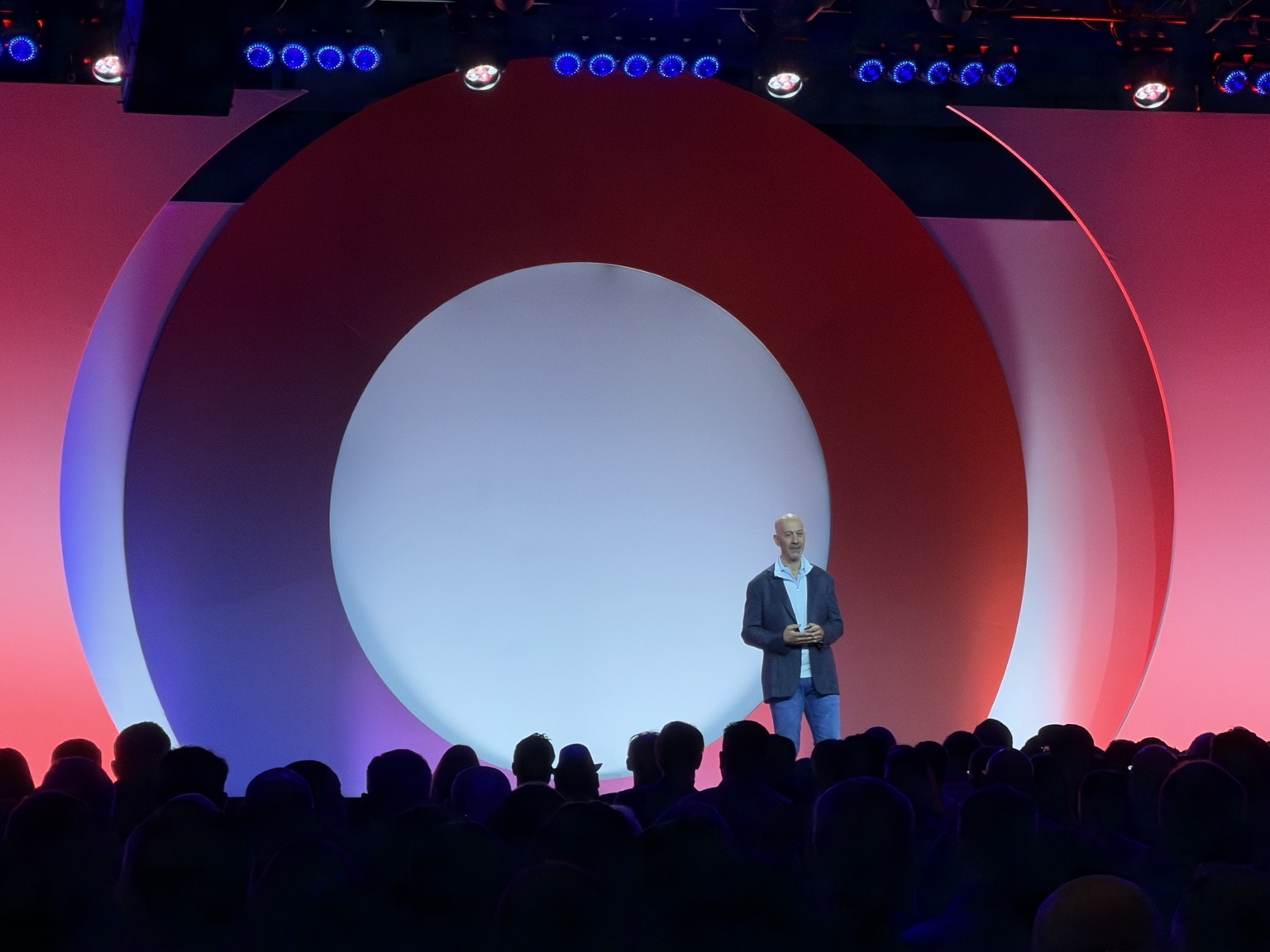
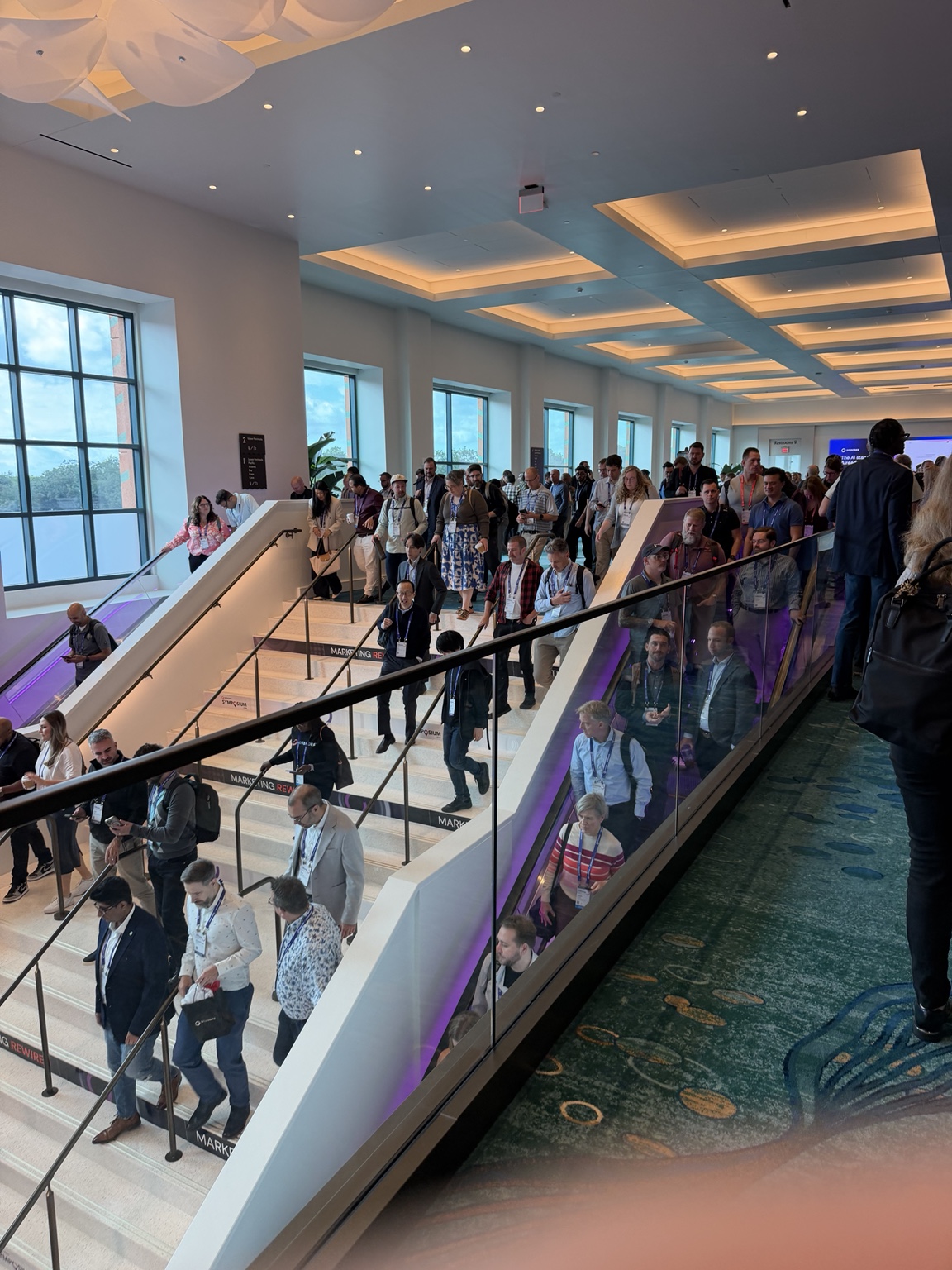
Sitecore Symposium 2026, held November 10–12 at the Walt Disney World Swan and Dolphin Resort in Orlando, brought a new question to the digital experience community: how should a brand operate when its next customer may discover it through an AI assistant? Under the theme Marketing Rewired, Sitecore introduced MarketingIQ and presented a direction that connects discovery, brand knowledge and execution. For developers, the subsequent release of the Developer MCP server in beta provides a particularly tangible starting point.
This technical recap is based on public announcements, documentation and community reporting available on November 24, 2026. It distinguishes shipped functionality from announced direction and proposes implementation patterns rather than presenting hypothetical experiments as measured results.
For additional event photographs, see the illustrated attendee report by Zaheer Tariq and the Arcsen photo recap.
1. Marketing Rewired: the architectural significance
A traditional digital experience architecture assumes that the website is the principal interface between a brand and its audience. Search engines, advertising and social channels bring visitors to a destination where analytics and personalization can observe behavior. AI-mediated discovery complicates that assumption. A prospective buyer may evaluate several vendors in a conversational interface before visiting any of their websites. The first interaction that a company can measure may therefore occur much later in the decision process.
The practical consequence is that content should be designed as reusable knowledge rather than exclusively as presentation. A product description needs a stable identity, explicit attributes, accurate claims, supporting evidence and an owner responsible for freshness. A rendering component may display that information differently on a product page, a comparison page or a mobile interface. The information itself should not have to be independently recreated for every presentation.
My architectural preference is to treat discoverability as a cross-functional quality attribute. It belongs alongside accessibility, performance and security, rather than being delegated entirely to the marketing team. Developers determine whether the information can be retrieved and understood; editors determine whether it is correct; product owners determine whether it reflects the customer journey. None of these responsibilities disappears because an AI agent enters the workflow.
The official Symposium website provides the event context. The shift discussed here is an interpretation of that direction, not a claim that conventional search or website traffic has ceased to matter.
2. MarketingIQ: turning intelligence into governed execution
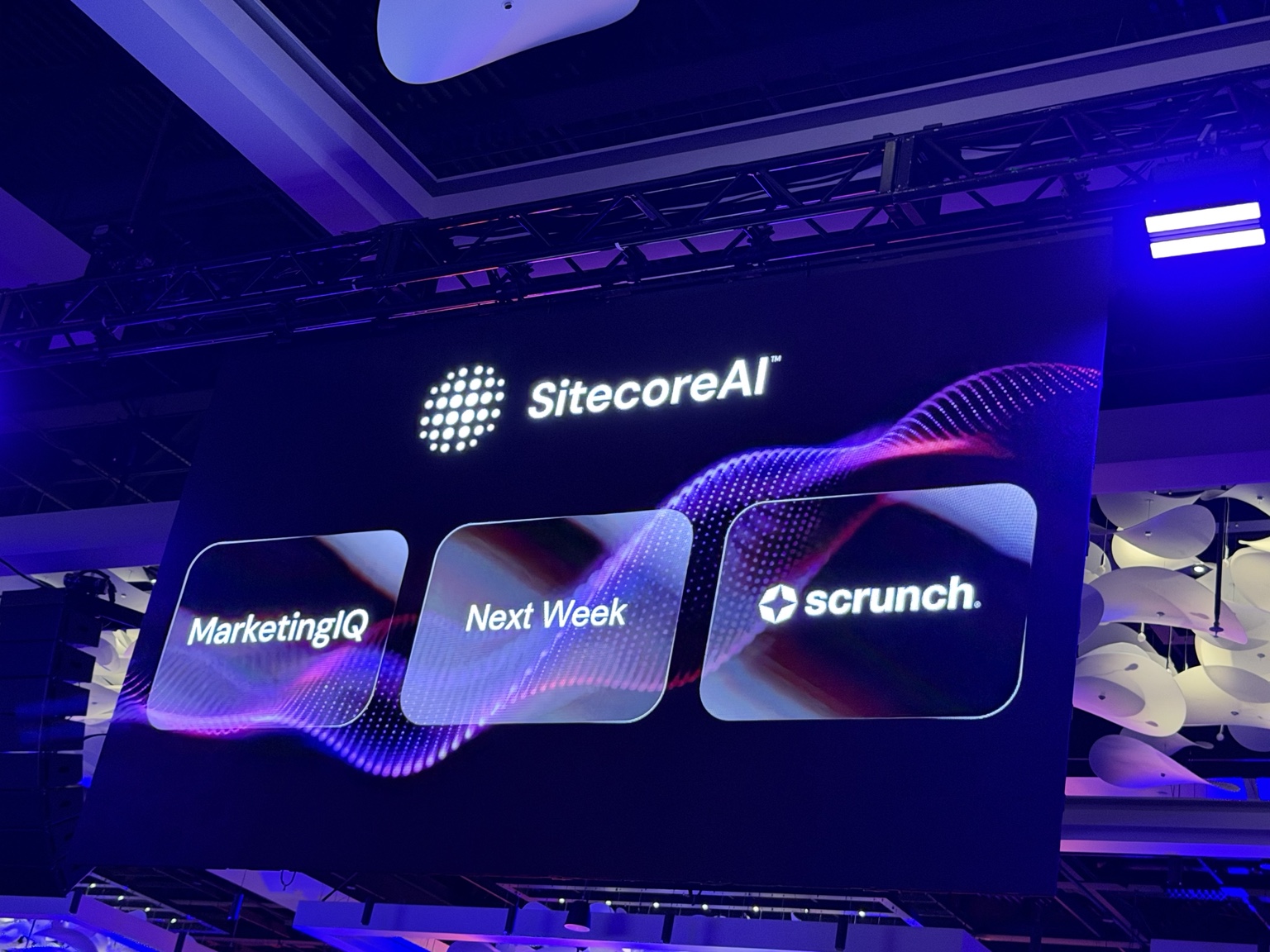
On November 11, Sitecore introduced MarketingIQ, a SitecoreAI module intended to connect brand intelligence, market signals and agent orchestration. The distinction between intelligence and execution is significant. Identifying an opportunity is not equivalent to producing a correct response, and producing a response is not equivalent to improving a business outcome.
Consider a hypothetical enterprise selling industrial equipment in several countries. Its marketing team discovers that prospective customers frequently ask about service availability in Latin America. Existing pages describe the equipment but omit regional service conditions. A useful agent-assisted workflow could identify the gap, collect approved service information, propose an editorial update, send it for review and measure subsequent performance. The example is a proposed implementation pattern, not a claim that every step is already available as a native MarketingIQ feature.
Establish a trusted context boundary
Before connecting any agent to a production content platform, identify authoritative sources. Product specifications may originate in a PIM, legal statements in a document repository and brand guidelines in a managed content library. Define the precedence of sources when they disagree. A generated statement should not become authoritative simply because it appears in a well-written draft.
Model provenance as part of the workflow. Record the source identifier, retrieval date, content version, proposed change, responsible reviewer and approval outcome. These fields make an investigation possible when a campaign contains an outdated statement. They also help engineers determine whether a failure originated in retrieval, generation or execution.
Use different approval requirements for different risk classes. A suggested headline may require ordinary editorial review. A regulated product claim, pricing change or regional contractual statement deserves a stronger validation path. Automation should accelerate the handoff, not erase the business rule.
Measure the loop rather than the output volume
Counting generated pages is a poor primary success metric. It rewards production even when the result is duplicative or inaccurate. Instead, measure time from identified opportunity to approved publication, correction rate, editorial effort and the business outcome associated with the changed content. Start with a baseline before introducing agents. Compare like-for-like content cohorts and record seasonality or concurrent campaigns that might influence the result.
For additional product context, see MarketingIQ and Sitecore’s explanation of brand knowledge and agent orchestration. Confirm tenant availability and licensing before planning delivery milestones.
3. Scrunch, Citation Optimization and the new discovery layer
Scrunch introduced Citation Optimization on November 12. The announcement focuses on identifying external sources that shape AI recommendations. This adds another dimension to content strategy: a company may control its own product pages but not the independent publications or community discussions that influence an assistant’s response.
Answer engine optimization (AEO) and generative engine optimization (GEO) are useful labels for this work, but neither should be treated as a guarantee of placement in generated answers. Assistants can vary by model, language, location, retrieval configuration and time. A single prompt result is an observation, not a population-level conclusion.
A practical measurement system should define a stable panel of customer questions, segment them by market and purchase stage, record answer observations over time and preserve the sources cited. Analyze factual accuracy separately from brand mentions. An assistant can mention a brand and still misrepresent its capabilities. Conversely, a useful answer can cite an authoritative source without naming the brand in its opening sentence.
Make the website a dependable source
For Sitecore teams, the implementation begins with content models and rendering quality. Expose meaningful page titles, semantic headings and relevant structured data where appropriate. Ensure public content is accessible through the intended delivery path. Review canonical URLs, redirect chains, response codes and crawl directives. Avoid duplicating core facts across disconnected fields whose values may diverge. Provide editorial owners with a clear way to update stale material.
These are engineering recommendations, not a promise that a specific crawler or AI service will retrieve a page. Respect robots directives and do not attempt to bypass another service’s access controls. A well-maintained public information architecture is valuable even when an AI system chooses a different source.
Attribution requires humility
AI-assisted discovery may occur outside the analytics boundary. A visitor can arrive directly after reading a generated recommendation, and a conventional session report may not reveal the earlier interaction. Use survey responses, known referrals, controlled experiments and business conversion data as complementary evidence. Do not label every direct visit as AI traffic. Doing so would exchange one attribution error for another.
The Sitecore newsroom provides the contemporary announcement and research context. The Sitecore Basics event recap includes photographs of the presentations and further community perspective.
4. Developer MCP: the most immediately testable developer announcement
Sitecore’s official changelog dated November 13 confirms that the Developer MCP server was released in beta. The published beta covers thirteen tools across component development, content modeling, site discovery and content creation. This is a documented release, rather than merely a conference roadmap item.
The Model Context Protocol provides an interface through which compatible AI clients can discover and invoke exposed tools. In this case the official documentation identifies Streamable HTTP and MCP OAuth. Developers can connect using supported clients including Visual Studio Code, Cursor, Claude Code, Codex and OpenCode. The production server address and documented server name are:
Server name: sc-developer
URL: https://edge-platform.sitecorecloud.io/mcp/developer
Transport: Streamable HTTP
Authentication: MCP OAuth
Release status: Beta
See the Developer MCP documentation and the release announcement for exact client configuration and supported capabilities.
A controlled proof of concept
Start in a non-production SitecoreAI environment. Connect a dedicated developer identity with appropriate permissions and verify the target environment before making changes. Begin with discovery: list sites, retrieve content types and inspect existing component definitions. These operations help the agent work with actual platform state instead of inventing identifiers.
Next, propose a small component such as a related-resources card. Ask the agent to inspect existing models and describe the proposed changes before invoking a write operation. Review the fields, validation requirements and site availability. Create the content type and component only after the proposed design is accepted. Verify the result through the platform interface and compare it with the intended design. Create a test content item under an approved parent and check rendering independently.
Do not assume that creating a component definition implements the complete frontend experience. Rendering code, responsive layout, accessibility, automated tests and deployment still need their own verification. An MCP mutation may be only one part of a larger engineering workflow.
Security and change management
OAuth authentication does not, by itself, establish that every operation is appropriate. Distinguish identity from authorization and authorization from business approval. Require explicit confirmation for meaningful writes, verify the intended target and record tool actions without exposing access tokens or sensitive content. Avoid putting secrets into prompts or configuration committed to source control.
For repeatable environments, maintain a record of intended mutations and verify actual state before retrying failed operations. A network timeout does not necessarily mean that a server-side write failed. Blind retries may create duplicate objects if the operation is not idempotent. Discover the resulting state, determine whether the change already exists and only then decide whether another request is appropriate.
Beta features should be evaluated against support expectations, compatibility and recovery procedures before they become mandatory parts of production delivery. My preference is to start with assistive, reviewable operations rather than autonomous production changes.
5. Open Access and agent interoperability
Community accounts from Orlando describe a direction toward accessing Sitecore from external conversational tools. This is strategically relevant because teams already work across different development, collaboration and productivity environments. The officially documented Marketer MCP and Agent API provide a concrete place to investigate interoperability today. Specific newly announced integrations should be checked against their release notes and entitlement requirements rather than assumed generally available.
See the Marketer MCP and Agent API overview and Marketer MCP documentation.
An enterprise integration should establish a trust boundary at every transition. An assistant can receive a request from a user, retrieve context and propose an operation. The platform must still enforce authorization on the operation. A chat interface should not become an alternative path around editorial controls. Treat retrieved documents and tool responses as data, not privileged instructions. This matters when external content contains text designed to induce an unintended action.
Separate developer and marketer capabilities by role. A marketer creating a campaign draft does not automatically need permission to change component definitions. A developer working on a test rendering does not automatically need permission to publish sensitive customer content. Review the principle of least privilege at the level of actual operations.
6. Digital asset management and brand governance
Another theme reported by attendees was the closer relationship between SitecoreAI and digital asset management. Sitecore’s MarketingIQ announcement also describes connecting asset access and content operations. The official changelog identifies DAM Assets API and DAM Context API capabilities in Early Access. Early Access should not be treated as a general-availability commitment.
For teams integrating assets into AI workflows, a binary file is only part of the object. Rights, territory, permitted usage, expiry, accessibility descriptions and approval status determine whether the asset belongs in a given campaign. Retrieval quality depends on the quality of metadata. A visually suitable photograph can be legally unsuitable for a particular use.
Define an asset lifecycle that handles expiration and revocation. If an image is withdrawn, identify published content that references it, invalidate caches where required and replace it through an approved workflow. Agent-generated proposals should use the same rights checks as manually authored content.
The photography decision in this article illustrates that distinction: real Symposium photographs are available in attendee reports, but a public URL alone does not establish republication rights. This article links to those reports rather than copying the photographs into a separate media library.
7. Implications for existing Sitecore XM and XP implementations
Community reporting describes MCP and modernization opportunities for existing XM and XP customers. Treat these announcements as a reason to investigate, not as evidence that every installed version can connect to every new service today. Confirm supported versions, deployment models, commercial agreements and the availability of documented integration mechanisms.
A modernization inventory should identify content templates, presentation dependencies, custom pipelines, scheduled jobs, search indexes, authentication integrations, forms, analytics and external systems. Classify each dependency by business value and migration complexity. Determine which features genuinely require a new platform and which can be improved independently.
For a mature XP implementation, an incremental approach may reduce risk. Establish a baseline, improve content quality and delivery performance, then test a narrowly scoped integration. Avoid replacing production workflows solely because an impressive conference demonstration exists. A migration plan should preserve business continuity and include a rollback or recovery approach.
Consider a hypothetical multilingual website with custom MVC renderings and a substantial editorial workflow. Moving to a headless architecture is not just a matter of copying content. Rendering logic, URL resolution, personalization requirements, media handling, preview behavior and publication semantics all need analysis. Agent-assisted development may help produce a migration inventory, but the inventory must be validated against the real application.
8. Community, MVPs and the value of shared experimentation
Symposium also provides a forum for the Sitecore community to compare experiences and discuss implementation challenges. Community reports describe the MVP gathering and a proposed access program. Consult official program communications before assuming eligibility, dates or entitlements.
For regional user groups such as those in Latin America, a useful follow-up would be a workshop that demonstrates a Developer MCP connection in a disposable environment, shows the content model before and after a change, and reviews permissions and recovery. Publishing both successful and failed experiments helps practitioners distinguish stable capabilities from assumptions.
9. A practical post-Symposium action plan
- Inventory existing Sitecore products, versions, environments and business workflows.
- Establish a discovery and content-quality baseline with repeatable questions and metrics.
- Evaluate MarketingIQ availability and choose a low-risk editorial use case.
- Connect Developer MCP in a test environment and exercise discovery before writes.
- Define approval, identity, audit and recovery requirements for agent operations.
- Review asset rights and content provenance before automated reuse.
- Share findings with the wider engineering and marketing community.
The Virtual Symposium on December 9, 2026 offers a further opportunity to revisit the announcements. It is an upcoming event as of this article’s research date, not a completed session.
10. Frequently asked questions
What was the main Sitecore Symposium 2026 announcement?
MarketingIQ, introduced on November 11, connects brand intelligence with signals and agent orchestration in SitecoreAI.
Is Developer MCP generally available?
No. The November 13 changelog identifies the release as beta. Verify the current status in the official documentation before adoption.
Does MarketingIQ replace existing editorial approvals?
It should not be interpreted that way. Organizations need to maintain their own authorization and review requirements, and verify the actual behavior of the configured platform.
Does every XM or XP installation support the new MCP capabilities?
Do not assume universal compatibility. Check official product documentation and the applicable commercial and technical prerequisites.
Closing perspective
The strongest architectural lesson from Orlando is that reliable brand knowledge becomes increasingly valuable when software agents participate in both discovery and execution. Developer MCP offers a concrete beta capability to investigate, while MarketingIQ points toward a broader operational model. The right response is not to automate everything immediately. It is to build trustworthy content, introduce well-scoped agent capabilities, preserve control over changes and measure whether the resulting experience actually improves.