From XM Cloud to SitecoreAI
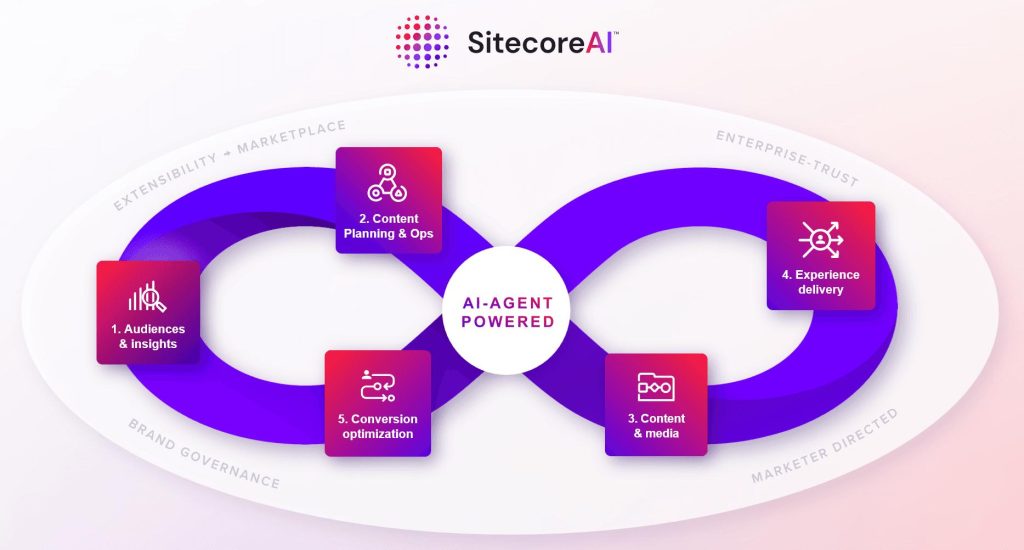
This is not just a new label on the same product story. It reflects a larger shift in how digital experience platforms are being used. Content teams no longer just need a CMS. They need a connected operating model for planning, creating, personalizing, testing, and improving experiences across many channels. SitecoreAI is Sitecore’s answer to that shift: a unified, AI-powered platform that brings content, data, personalization, assets, and automation into one connected environment.
XM Cloud gave teams the cloud foundation
XM Cloud solved a practical problem. Many organizations wanted the power of Sitecore without the drag of traditional upgrade cycles, infrastructure maintenance, and slower release paths.
For marketers, XM Cloud meant faster publishing, easier visual editing, and more independence from technical teams. For developers, it meant headless delivery, modern front-end patterns, and cleaner ways to build with APIs. For IT leaders, it meant a SaaS model that reduced the weight of platform operations.
That foundation still matters. SitecoreAI does not ignore the work XM Cloud started. Sitecore’s own announcement says SitecoreAI is built on the foundation of XM Cloud. The bigger change is that the platform now places AI at the center of the experience layer, not as a side feature.
SitecoreAI changes the center of gravity
In XM Cloud, the main focus was on content management in the cloud.
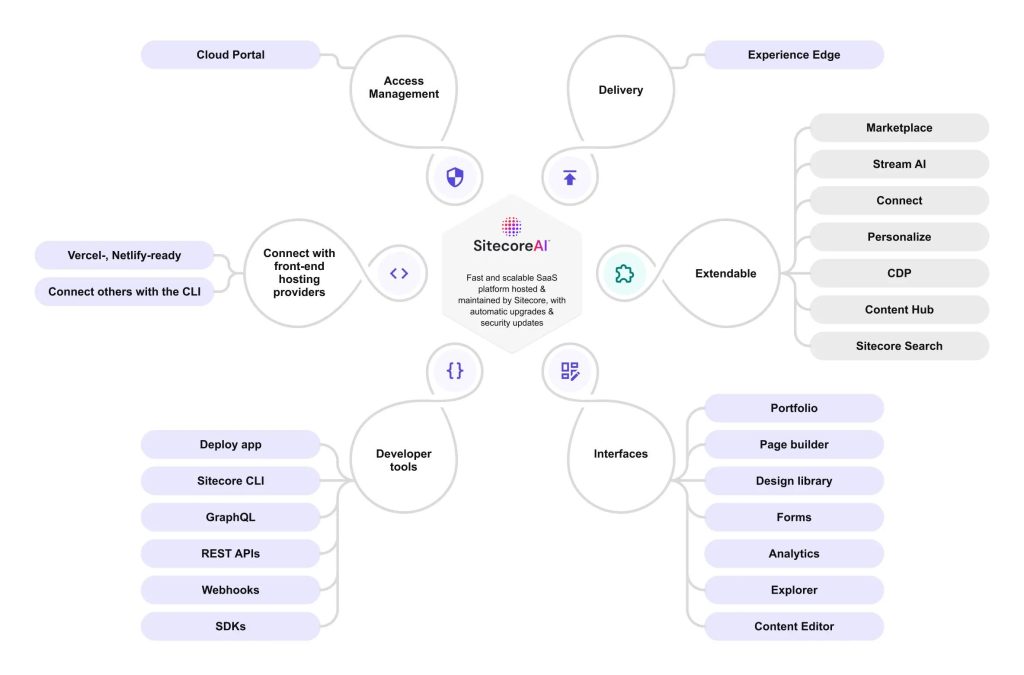
In SitecoreAI, the focus widens. The CMS is still important, but it becomes one part of a larger marketing workspace. SitecoreAI connects content management, digital asset management, content operations, audience insights, personalization, testing, search, and agentic automation. Sitecore positions it as “one platform” where content, data, and personalization work together instead of being stitched across separate tools.
That matters because most digital teams do not struggle with content creation alone. They struggle with handoffs.
A campaign starts with planning. Assets live somewhere else. Content is written in another place. Personalization rules sit in a different product. Analytics come later, often too late to influence the work already in motion.
SitecoreAI tries to reduce that gap by giving teams a single workspace for the full cycle: plan, create, deliver, measure, and improve.
What changes for marketers
The biggest change for marketers is navigation and flow.
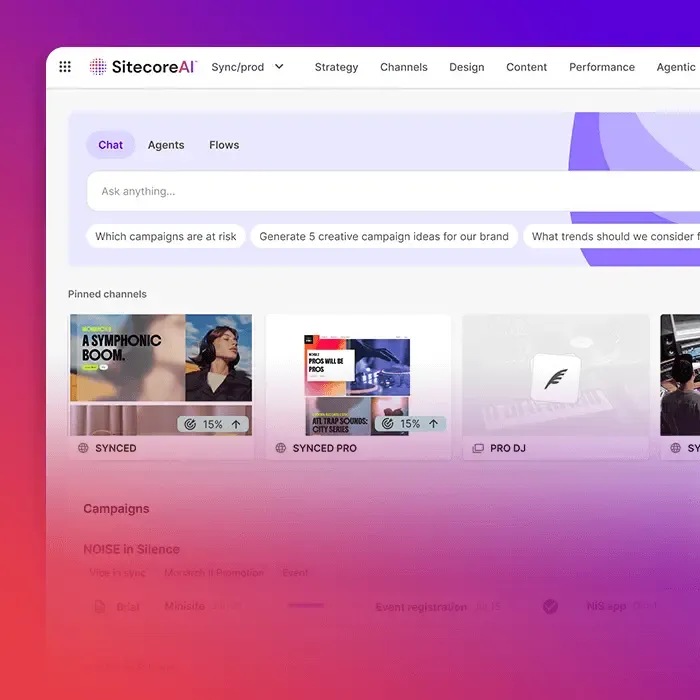
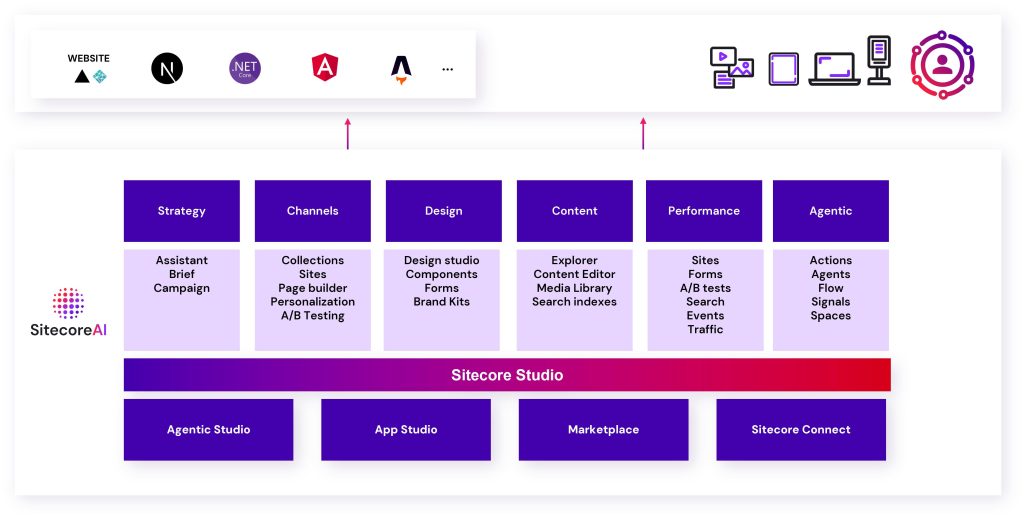
Sitecore’s documentation explains that people who used XM Cloud will now see a unified SitecoreAI workspace that brings planning, creation, delivery, and optimization together. Instead of jumping between separate areas for strategy, content, design, and analytics, teams can work through a more connected interface.
Some familiar XM Cloud areas have moved into new sections:
| XM Cloud area | SitecoreAI area |
|---|---|
| Portfolio and Sites | Channels |
| Design Library, Components, Forms | Design |
| Content, Content Editor, Media Library | Content |
| Planning and Projects | Strategy |
| Analytics | Performance |
| New AI automation layer | Agentic |
This is more than a menu change. It shows the product moving from “where do I edit this page?” to “how do I move this experience from idea to performance?”
That is a better match for how marketing teams actually work.
Agentic Studio is the new headline feature
The clearest new idea in SitecoreAI is Agentic Studio.
Sitecore describes it as a workspace where marketers and AI collaborate to plan, create, and personalize experiences. The platform includes ready-made AI agents and workflows designed to support tasks like research, content creation, translation, campaign coordination, and optimization.
The useful point here is not “AI writes everything.” That would be the wrong takeaway.
The better takeaway is that SitecoreAI is designed to reduce repetitive work around the content lifecycle. A team could use agents to help generate campaign briefs, create component variants, surface audience signals, suggest personalization opportunities, or speed up production tasks that used to take several manual steps.
The human team still owns the strategy, brand judgment, approvals, and final experience. AI becomes part of the workflow instead of a separate tab.
What changes for developers
Developers also need to pay attention to the shift.
Sitecore has introduced a formal SDK lifecycle for XM Cloud and SitecoreAI work. Content SDK 1.x is now the actively supported and recommended SDK, while JSS support for XM Cloud is being phased out.
That is a practical signal. Teams planning new builds or modernizing older XM Cloud implementations should review their front-end approach, especially if they are still depending heavily on JSS patterns. Sitecore also introduced Content SDK to simplify front-end application development for XM Cloud, reduce template complexity, and better align with XM Cloud Pages.
For developers, the move to SitecoreAI is not only about learning a new interface. It is about building a platform where content, data, workflows, and AI agents are more connected by default.
What teams should do before moving forward?
The transition from XM Cloud to SitecoreAI should not start with tools. It should start with operating model questions.
Ask where your team loses the most time today. Is it campaign planning? Asset approvals? Localization? Personalization setup? Testing? Reporting? Those friction points are where SitecoreAI’s connected platform and AI-assisted workflows may create the most value.
Then review your technical foundation. Make sure your front-end architecture, SDK choices, content model, integrations, governance rules, and analytics setup are ready for a more connected platform. AI will not fix messy content operations on its own. It works best when the basics are clean.
Finally, prepare your teams. Marketers will need to understand the new workspace. Developers will need to understand the new SDK direction. Leaders will need to set clear rules for AI use, brand control, privacy, and approvals.
The bigger picture
XM Cloud was about getting Sitecore into the cloud era.
SitecoreAI is about getting digital teams into the AI-assisted experience era.
The shift is not just technical. It changes how teams think about digital experience delivery. A page is no longer the end goal. A campaign is no longer a set of disconnected assets. A CMS is no longer just a publishing system.
The new goal is a connected loop where content, data, personalization, and performance keep informing each other.
For organizations already on XM Cloud, SitecoreAI looks like the next natural step. For teams still on older Sitecore platforms, it raises a bigger question: not just “when should we modernize?” but “what kind of digital operating model do we want next?”
That is the real move from XM Cloud to SitecoreAI. Not just from one product name to another, but from cloud content management to AI-powered experience orchestration.