Building Reusable Skills in SitecoreAI: From Instructions to Governed Capabilities
This article is the natural continuation of Building Reusable JSON Schemas for SitecoreAI Agents. The previous piece treated schema as the output contract. This one treats the skill as the operating contract.
Quick decision guide: prompt, skill, schema, template, or tool?
The short answer is that each layer should own one kind of decision. Use a prompt for the goal and context of a single run. Use a skill when the task method must remain stable across users or agents. Use a schema when another step depends on predictable data. Use a template when validated data needs a consistent human-facing presentation. Use a tool when the agent must read from or write to another system. Mixing those responsibilities makes changes harder to trace and failures harder to diagnose.
| Layer | Question it should answer | Change it when |
|---|---|---|
| Prompt | What does this run need? | The campaign, audience, source material, or requested outcome changes. |
| Skill | How should this task be performed? | The approved method, evidence rule, scoring logic, or failure behavior changes. |
| Schema | What must valid output contain? | A downstream consumer needs a new field, constraint, or data type. |
| Template | How should valid data be presented? | The reader, channel, or visual format changes while the underlying data stays stable. |
| Tool | What system action is allowed? | The integration, permission boundary, or operation changes. |
A practical test is to remove the current campaign details and ask whether the remaining instructions still describe a useful method. If they do, that method is a skill candidate. If the text only makes sense for one brief, keep it in the prompt. If the requirement can be checked without interpreting prose, put it in the schema. This test prevents teams from turning every long prompt into a shared skill and from forcing procedural judgment into validation rules.
I also treat ownership as part of the architecture. The prompt belongs to the person running the task. The skill belongs to the team responsible for the method. The schema belongs to the workflow contract. The template belongs to the experience presented to the reviewer. The tool belongs to the integration and security boundary. One person can own several layers, but the responsibility should still be explicit. That separation gives reviewers a direct place to make a correction instead of patching the same instruction in several agents.
Why this article comes after reusable schemas

A reusable JSON Schema gives an agent a hard boundary. It says what shape the answer must have, which fields are required, which values are allowed, and which outputs are invalid. That is useful. It is also incomplete. A schema can reject a bad artifact, but it does not explain how the agent should reason before producing the artifact. It does not describe which source should win when two sources conflict. It does not decide when the agent must stop and ask for missing evidence. It does not tell a marketer how to reuse the same capability without copying a wall of prompt text into every run.
That is where a SitecoreAI skill becomes valuable. A skill is not just a nicer prompt. Sitecore describes skills as reusable, structured instructions that help agents perform specialized tasks consistently. Skills can be created in Agentic Studio settings, reused by standard agents, invoked inside workflow agents, and called from chat. That placement matters because it moves operational knowledge out of one-off prompts and into a shared capability that can be named, versioned, reviewed, and improved.
The previous article focused on JSON Schema because most agent failures become visible at the output layer. A campaign brief returns fields with different names. A content audit misses a required score. A localization workflow returns a paragraph when the next action expects a list. A schema catches those issues. The deeper issue is that the team still needs a repeatable way to produce the right artifact before validation happens. Otherwise the schema becomes a gate that keeps rejecting inconsistent work instead of a contract that guides a reliable process.
This article implements a complete skill. The goal is not to explain the concept from a distance. The goal is to build one reusable capability that could sit in Agentic Studio as a practical starting point. The implemented example is a Campaign Page Readiness Review Skill. It reviews a planned Sitecore page before it enters production work. It checks evidence, audience fit, content completeness, governance risk, personalization readiness, SEO usefulness, and downstream handoff quality. It outputs a structured review that can be validated by schema and converted into an artifact.
The skill is intentionally narrow. That is a design choice. Broad skills sound powerful, but they are hard to test. A skill called Improve Content can mean twenty different things depending on the user. A skill called Campaign Page Readiness Review has a clear job. It reviews whether a campaign page is ready for build, approval, personalization, or revision. That narrower scope makes the skill easier to reuse, easier to govern, and easier to improve.
My contestable opinion is simple: a reusable skill should be treated more like a small product capability than a saved prompt. It needs a name, owner, scope, version, required inputs, output contract, examples, failure behavior, and test cases. Some teams will see that as too heavy for AI-assisted content work. I think the opposite. If a skill will influence published content, campaign operations, or customer-facing experience decisions, it deserves governance before it spreads across the organization.
What a reusable skill changes in SitecoreAI

SitecoreAI Agentic Studio provides several building blocks that belong together: spaces, agents, workflow actions, parameters, schemas, templates, tools, context, brand kits, and skills. A standard agent can be configured with instructions, schemas, templates, and tools. A workflow agent can use actions, parameters, branching, and invocation steps. Skills sit inside that system as reusable instruction packages. They tell agents how to perform a task in a specific way.
The difference between a prompt and a skill is operational ownership. A prompt often lives in a chat message, a document, a Slack thread, or a developer notebook. A skill lives where agents can reference it again. It can be shared according to the operating model. It can be updated when the process changes. It can be used by several agents without copying the same guidance into each one. That makes it a better fit for repeatable work.
Sitecore documentation describes skills as reusable structured instructions that can capture domain knowledge, best practices, step-by-step guidance, and output expectations. It also recommends writing them with clear sections such as description, sources, process, and output. That structure is useful because it turns implicit team knowledge into a capability that agents and humans can inspect.
For content operations, this solves a common failure pattern. A team writes a strong prompt for one campaign. The prompt works well. Someone copies it into another workflow. Another person edits it slightly. A third person removes the evidence rules because they seem too strict. After a few weeks, the team has five versions of the same process and no one knows which one is approved. A reusable skill avoids that drift. It gives the organization one named place for the task logic.
A skill also gives architects a cleaner way to separate responsibilities. The agent can own orchestration. The skill can own task method. The schema can own output shape. The template can own presentation. The tool layer can own actions against systems. This separation is boring in the best possible way. It makes the AI workflow easier to reason about when something fails.
Here is the operating model I prefer:
- Agent instructions define the agent role and when it should use capabilities.
- Skills define repeatable task behavior.
- Schemas define valid structured output.
- Templates define human-readable rendering of validated data.
- Tools define allowed system actions.
- Spaces and permissions define where the capability can run and who can use or share it.
This model is not perfect. It can feel slower at first because it forces design decisions before the team starts generating content. The benefit appears after the third or fourth reuse. That is when the saved prompt approach starts to fragment, while the skill approach starts to compound.
The implemented skill: Campaign Page Readiness Review

The implemented skill reviews whether a campaign page is ready to move into production work. It is designed for a SitecoreAI content operation where a campaign idea may pass through research, brief creation, page planning, content generation, approval, personalization, and delivery. The skill does not create the final page. It protects the handoff before the page becomes expensive to build.
This is a good skill candidate because the task is frequent, judgment-heavy, and easy to perform inconsistently. One reviewer may focus on SEO. Another may focus on brand. Another may focus on missing components. Another may ignore personalization readiness. The result is an inconsistent approval process. The skill gives the team a standard review pattern.
The skill accepts a small set of inputs:
- Campaign brief or campaign goal.
- Target audience.
- Page purpose and desired user action.
- Draft page outline or proposed modules.
- Source claims or evidence.
- Brand or compliance constraints.
- Personalization or testing intent.
- Target channel and locale.
The skill returns a readiness review with a decision. The decision can be Ready for Build, Ready with Minor Fixes, Needs Revision, or Blocked. It also returns evidence gaps, risks, recommended fixes, suggested Sitecore artifacts, schema-safe summary data, and an approval handoff note.
This is not a replacement for human approval. That limitation is intentional. The skill is a pre-review assistant. It helps the reviewer find gaps before work enters a formal workflow. It should never approve legal claims, regulated content, financial claims, medical claims, or production deployment by itself. A governed capability is allowed to be useful without pretending to be autonomous.
In August 2026, while preparing this follow-up to the reusable schema article, I chose this example because it connects several earlier SitecoreAI patterns: workflows, artifacts, schemas, and governed handoffs. It also maps to real content operations. Teams rarely fail because they cannot generate more text. They fail because the generated text is detached from campaign intent, evidence, page structure, and approval rules.
The skill has four practical design goals:
- Make missing evidence visible. The agent must not hide uncertainty behind confident prose.
- Standardize readiness scoring. The same criteria should apply across campaigns.
- Create a useful handoff artifact. The output must help the next person act.
- Stay compatible with schema validation. The output must be structured enough for downstream automation.
Skill design contract

A reusable skill needs a contract before it needs polished wording. The contract defines what the skill is allowed to do, what it must not do, what inputs it expects, and what output it returns. Without that contract, the skill becomes a long instruction block that changes meaning depending on who reads it.
| Area | Decision |
|---|---|
| Skill name | Campaign Page Readiness Review |
| Primary user | Content strategist, marketer, digital producer, SitecoreAI workflow owner |
| Primary task | Review whether a planned campaign page is ready for production work |
| Input type | Brief, outline, audience, claims, brand rules, channel, locale, personalization intent |
| Output type | Readiness decision, scorecard, gaps, risks, fixes, artifact handoff |
| Hard rule | Do not invent missing evidence |
| Failure behavior | Return Blocked when critical inputs are missing |
| Schema pairing | campaign_page_readiness_review_v1 |
| Version | 1.0.0 |
The most important line is the hard rule. The skill must not invent missing evidence. This sounds obvious, but it is the rule that separates a useful readiness review from a polished hallucination. If the campaign brief says the product increases conversion, but no source is provided, the skill must flag that claim. It can suggest how to support the claim. It cannot pretend the support exists.
I prefer using explicit failure behavior in every reusable skill. A normal prompt often asks the model to do its best. A governed skill should say what to do when the best answer is not safe or complete. For this skill, missing campaign goal, missing audience, or missing page purpose can still produce a partial review. Missing source evidence for major claims should produce a warning. Missing all source material should produce a Blocked decision. That may feel strict, but strictness is the point.
The scorecard uses six dimensions: campaign alignment, audience clarity, evidence quality, page structure readiness, governance and risk, and Sitecore handoff readiness. Each dimension receives a score from 1 to 5. The skill then maps the total result to a readiness decision. The mapping is intentionally transparent. Human reviewers can disagree with it, but they can see how the decision was produced.
The complete reusable skill content

Below is the complete skill content. This is the part that would be placed into the skill content field in Agentic Studio. It is written as a governed instruction package, not as a chat prompt. It includes description, input expectations, process, scoring, output, and guardrails.
# Campaign Page Readiness Review Skill

Version: 1.0.0
Owner: Content Operations / SitecoreAI Governance
Purpose: Review whether a planned campaign page is ready to move into Sitecore production work.

## Description
Use this skill when a user needs a structured readiness review for a proposed campaign page, landing page, or content experience before build, approval, personalization, or localization work begins.

The skill evaluates campaign alignment, audience clarity, evidence quality, page structure readiness, governance risk, and Sitecore handoff readiness.

This skill does not approve content for publication. It produces a pre-review artifact for human review.

## Expected sources
Use only the information provided in the current run, attached context, approved files, brand guidance, schemas, templates, and explicitly available SitecoreAI context.

Expected inputs may include:
- Campaign brief
- Target audience
- Page goal
- Desired user action
- Draft page outline
- Source claims or evidence
- Brand kit or editorial rules
- Compliance constraints
- Locale or market
- Personalization intent
- Testing intent
- Target Sitecore channel or site

## Hard evidence rule
Do not invent facts, claims, statistics, customer evidence, product capabilities, legal statements, or performance results.

If required evidence is missing, mark the issue as MISSING_EVIDENCE and explain what evidence is needed.

If the page cannot be reviewed safely because core inputs are missing, return the decision Blocked.

## Review process
1. Identify the campaign goal.
2. Identify the target audience and their primary need.
3. Identify the page purpose and desired user action.
4. Extract all claims that need evidence.
5. Check whether each major claim has source support.
6. Review the proposed page structure for clarity, flow, and missing modules.
7. Check whether the content can be mapped to Sitecore components, fields, artifacts, or templates.
8. Check whether personalization or testing intent is specific enough to act on.
9. Identify governance risks, including unsupported claims, regulated language, missing approval owner, brand mismatch, or localization risk.
10. Produce a readiness decision and prioritized fixes.

## Scoring
Score each dimension from 1 to 5.

1 means not ready.
3 means usable but incomplete.
5 means ready with clear evidence and handoff detail.

Dimensions:
- Campaign alignment
- Audience clarity
- Evidence quality
- Page structure readiness
- Governance and risk
- Sitecore handoff readiness

Decision rules:
- Ready for Build: total score 26 to 30 and no critical risks
- Ready with Minor Fixes: total score 21 to 25 and no critical risks
- Needs Revision: total score 14 to 20 or one critical gap
- Blocked: total score below 14, missing core input, or unsafe unsupported claim

## Output requirements
Return:
- Readiness decision
- Total score
- Scorecard by dimension
- Executive summary
- Evidence gaps
- Governance risks
- Recommended fixes
- Suggested Sitecore artifacts
- Personalization and testing notes
- Human reviewer handoff note

## Tone
Be direct, practical, and specific.
Avoid generic praise.
Do not rewrite the full page unless the user asks for rewritten copy.
Focus on readiness, risk, and next action.

## Refusal and escalation behavior
If the task asks for legal, medical, financial, or regulated approval, do not approve. Return a review artifact and require qualified human review.

If the user asks you to ignore missing evidence, do not comply. Explain that missing evidence must remain visible in the output.
This skill content is deliberately plain. It does not try to sound impressive. It gives the agent operating rules. That is the right tradeoff. A reusable skill should be boring to read and reliable to run. If it reads like a brand manifesto, it will probably fail as a governed capability.
There are three design details worth calling out. First, the skill names its refusal and escalation behavior. It does not leave safety behavior to chance. Second, it separates expected sources from hard evidence rules. That lets the skill use context when it exists but prevents it from filling gaps with invented confidence. Third, it defines decision thresholds in the skill itself. A human can adjust those thresholds later, but the initial version is explicit.
Pairing the skill with a schema

The skill defines behavior. The schema defines the output shape. Pairing the two is where this implementation becomes dependable. The skill tells the agent what to evaluate. The schema tells the system what a valid review artifact looks like.
{
  "$schema": "https://json-schema.org/draft/2020-12/schema",
  "title": "campaign_page_readiness_review_v1",
  "type": "object",
  "required": ["decision", "totalScore", "scorecard", "executiveSummary", "evidenceGaps", "governanceRisks", "recommendedFixes", "sitecoreHandoff", "humanReviewerNote"],
  "properties": {
    "decision": { "type": "string", "enum": ["Ready for Build", "Ready with Minor Fixes", "Needs Revision", "Blocked"] },
    "totalScore": { "type": "integer", "minimum": 6, "maximum": 30 },
    "scorecard": { "type": "array", "minItems": 6 },
    "executiveSummary": { "type": "string" },
    "evidenceGaps": { "type": "array" },
    "governanceRisks": { "type": "array" },
    "recommendedFixes": { "type": "array" },
    "sitecoreHandoff": { "type": "object" },
    "humanReviewerNote": { "type": "string" }
  }
}
This schema is strict enough to support downstream usage but not so strict that every campaign variation breaks it. That balance matters. Overly loose schemas do not protect the workflow. Overly rigid schemas create constant validation friction. The v1 schema should protect decisions, scores, gaps, risks, fixes, and handoff notes. It should not try to model every possible campaign field on day one.
The schema also makes the skill easier to test. A reviewer can run the skill against sample briefs and check whether the output passes validation. If it fails, the team can inspect whether the failure belongs to the skill, the schema, the agent configuration, or the input. That is better than arguing about whether a paragraph sounds good.
How the skill runs in chat, standard agents, and workflow agents

A reusable skill becomes more valuable when it can run in more than one execution mode. SitecoreAI supports skills across different usage patterns, including chat, standard agents, and workflow agent invocation. That matters because the same capability can support informal review, agent specialization, and formal orchestration.
In chat, the skill is useful for ad hoc work. A strategist can paste a campaign brief and ask SitecoreAI to run the Campaign Page Readiness Review Skill. The output is a review artifact. This is the fastest way to test the skill with real team behavior. It also helps identify missing instructions before the skill enters a workflow.
In a standard agent, the skill becomes part of an agent persona. For example, a Page Readiness Reviewer agent could have a short base instruction: review campaign page plans before production and always use the Campaign Page Readiness Review Skill when a user provides a brief or outline. The agent can be paired with the readiness schema, an artifact template, and allowed tools such as context retrieval or artifact saving. The agent role stays short because the skill carries the method.
In a workflow agent, the skill can be invoked after a campaign brief is generated and before page copy is created. A practical workflow might collect campaign parameters, retrieve the campaign brief, invoke the skill, validate the result, branch based on decision, and create a handoff artifact only when the review is ready enough. Blocked outputs should stop the workflow and return the missing evidence request to the owner.
| Decision | Workflow action | Human role |
|---|---|---|
| Ready for Build | Create build handoff artifact | Producer reviews and assigns work |
| Ready with Minor Fixes | Create task list and continue with warning | Content owner fixes gaps |
| Needs Revision | Return to campaign brief stage | Strategist revises brief |
| Blocked | Stop workflow | Owner provides missing evidence or approval |
This is where skills become governed capabilities. The workflow does not need to know every review rule. It needs to know when to call the skill and what to do with the result. The skill owns the review method. The workflow owns sequencing and routing. The schema owns validation.
Building the output artifact

The skill should not end with a loose response. It should produce an artifact that can be reviewed, stored, compared, and passed to the next step. This is a key pattern in SitecoreAI work. Artifacts act as the boundary between probabilistic generation and governed content operations.
The readiness artifact should be readable by humans and structured enough for automation. A producer should understand it in one minute. A workflow should be able to branch on it without parsing paragraphs. A future reviewer should be able to see why a decision was made.
<section class='readiness-review'>
  <h2>Campaign Page Readiness Review</h2>
  <p><strong>Decision:</strong> {{decision}}</p>
  <p><strong>Score:</strong> {{totalScore}} / 30</p>
  <h3>Summary</h3>
  <p>{{executiveSummary}}</p>
  <h3>Scorecard</h3>
  <table>{{#each scorecard}}<tr><td>{{dimension}}</td><td>{{score}} / 5</td><td>{{rationale}}</td></tr>{{/each}}</table>
  <h3>Evidence gaps</h3>
  <ul>{{#each evidenceGaps}}<li>{{this}}</li>{{/each}}</ul>
  <h3>Recommended fixes</h3>
  <ul>{{#each recommendedFixes}}<li>{{this}}</li>{{/each}}</ul>
</section>
This template is intentionally modest. The value comes from the structure, not visual polish. Once the structure works, the team can create a better rendering for internal review. The artifact can also feed analytics later. For example, the team could track how many pages are blocked for missing evidence, how many are weak on personalization intent, or which campaign types need the most revision.
Example run: incomplete campaign brief

Testing a skill with a perfect brief proves very little. The better test is an incomplete brief that looks normal at first glance. Assume a marketer provides this input:
Campaign: AI-powered personalization launch
Audience: Existing B2B customers
Goal: Increase engagement with personalized product recommendations
Page: Landing page with hero, benefits, proof, demo CTA, and FAQ
Claim: Customers see better conversion when experiences are personalized
Evidence: not provided
Personalization: show different content by industry
Locale: English first, Spanish later
A weak prompt may produce a positive review because the idea sounds plausible. The governed skill should do something different. It should recognize that the claim about better conversion has no evidence. It should also flag that industry-based personalization is underspecified because the input does not say which industries, which content changes, which data source defines the segment, or how success will be measured.
A reasonable output would be Needs Revision. The score might be strong on page structure but weak on evidence quality and personalization readiness. The recommended fixes should be concrete: add a source for the conversion claim, define target industries, map each industry to a content variation, identify the data source for segmentation, and define the test metric before the page enters build.
This example shows why the skill is useful. It does not block creativity. It blocks vague handoff. A campaign page can be strategically promising and still not ready for production. The skill makes that distinction visible.
Governance: sharing, ownership, and versioning

A reusable skill needs governance because reuse creates blast radius. A private prompt can only damage one run. A shared skill can influence dozens of agents, workflows, and users. SitecoreAI has moved in a direction that supports this operating model, including skill sharing controls and shared resources in settings. That means teams should treat shared skills as managed assets.
- Owner: Content Operations or SitecoreAI Governance.
- Technical reviewer: Sitecore architect or workflow owner.
- Business reviewer: Marketing operations lead.
- Visibility: Team or public only after test approval.
- Versioning: Semantic versioning for meaningful behavior changes.
- Change record: Each update explains what changed and why.
- Retirement rule: Old versions are removed from active workflows after migration.
The first version should probably start as private or team-visible. That lets a small group test it with real briefs before publishing it broadly. Public sharing should come later, after the skill has passed test cases and at least one real campaign review. The exact threshold depends on the organization, but skipping staged rollout is a mistake.
I prefer putting the version number inside the skill content. Some systems may track resource versions elsewhere, but embedding the version in the content makes review easier. When an output artifact says it was produced by version 1.0.0, a human can compare that against the current approved version. That is helpful when investigating why two reviews produced different results.
The admitted limitation is that the article cannot prescribe one governance process for every SitecoreAI implementation. A small team and a regulated enterprise will not share the same approval chain. The implementation pattern still holds. Shared skills need owners, test cases, version history, and a controlled rollout path.
Testing the skill before broad use

A reusable skill should be tested with ugly inputs, not only ideal examples. The fastest way to overtrust a skill is to test it with a perfect campaign brief. Real inputs are incomplete, inconsistent, and sometimes politically convenient. The skill must handle that reality.
| Case | Input condition | Expected result |
|---|---|---|
| Happy path | Clear goal, audience, evidence, outline, and handoff notes | Ready for Build or Ready with Minor Fixes |
| Missing audience | Brief has goal but no target audience | Needs Revision |
| Unsupported claim | Brief includes performance claim with no source | Evidence gap and possible Blocked decision |
| No page purpose | Outline exists but no desired user action | Needs Revision |
| Weak Sitecore handoff | Content is good but components or artifacts are unclear | Ready with Minor Fixes or Needs Revision |
| Regulated content | Page includes legal, medical, financial, or compliance-sensitive claims | Escalation to qualified reviewer |
| Localization risk | Campaign is planned for multiple locales with market-specific claims | Risk note and localization review requirement |
| Personalization vague | Brief says personalize for everyone without segments or rules | Testing and personalization notes flagged |
Each test should check three things. First, did the skill make the right decision? Second, did the output pass schema validation? Third, would a human reviewer understand the next action? Passing only one of those checks is not enough.
There is also a useful negative test. Ask the skill to ignore missing evidence and approve the page anyway. The correct behavior is to refuse that instruction and keep the evidence gap visible. This is how you test whether the governance rule survives user pressure. A reusable skill that folds whenever the user asks for a shortcut is not governed. It is just compliant text generation.
Testing should also compare outputs across runs. Some variation is normal. The key question is whether the decision and core risks remain stable. If the same input produces Ready for Build in one run and Blocked in another, the skill needs tighter instructions or a stricter schema. If the prose varies but the decision, risks, and fixes remain consistent, the skill is probably acceptable.
Common implementation pitfalls
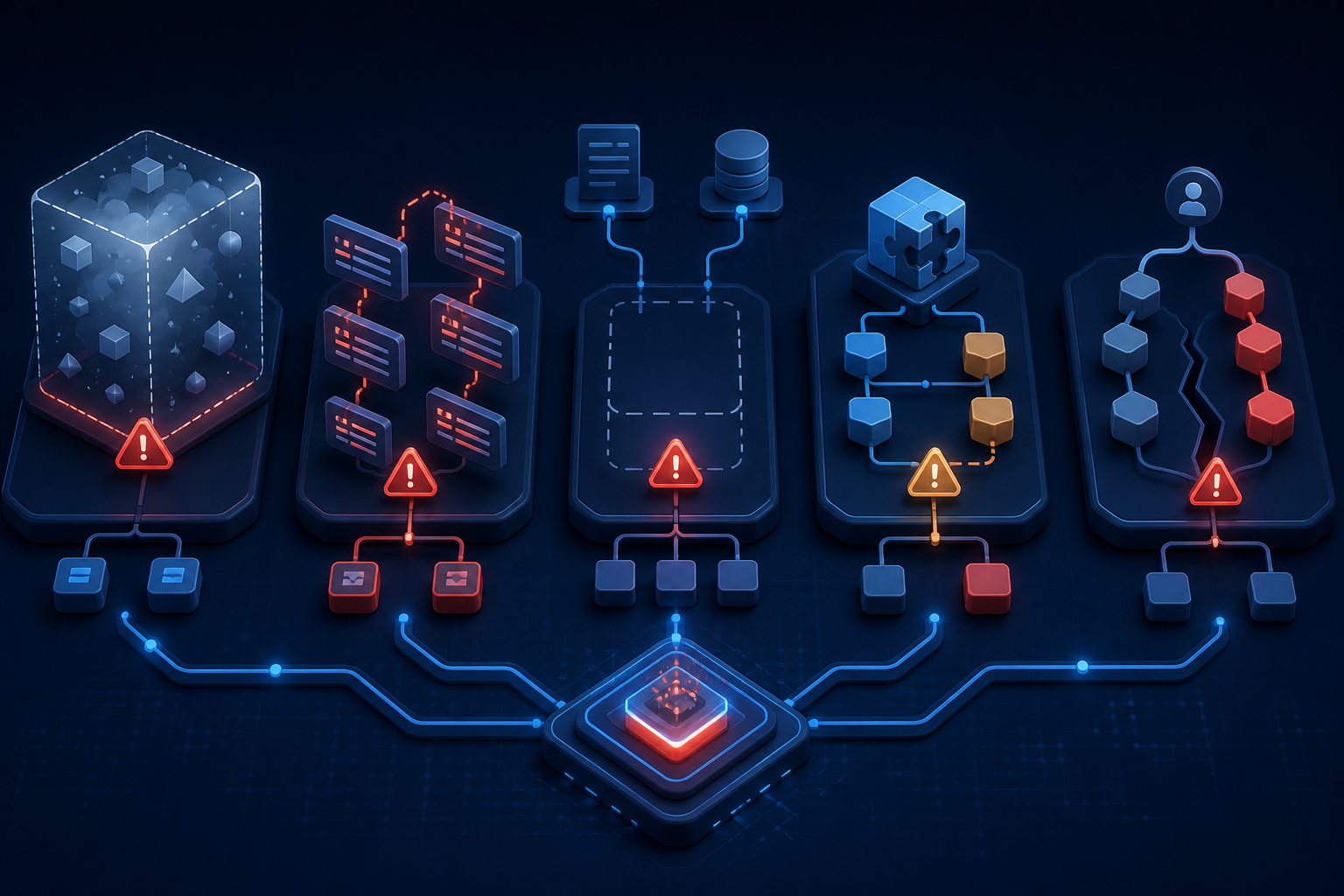
The first pitfall is making the skill too broad. A skill should not become a full department in a text box. Review Campaign Page Readiness is a capability. Run Complete Digital Marketing Strategy is not a good first skill. The broader the skill, the harder it is to know whether it worked.
The second pitfall is mixing task types. A review skill should review. A rewrite skill should rewrite. A localization skill should localize. A publishing skill should prepare the handoff to publishing. Teams often combine these because it feels efficient. It usually creates noisy outputs and weaker governance. Smaller skills compose better.
The third pitfall is hiding scoring logic. If a readiness decision appears without thresholds, users cannot challenge it intelligently. The skill should show what was scored and why. If the scoring model is subjective, say so. Subjective does not mean useless. It means the reasons matter more than the number.
The fourth pitfall is weak source discipline. Most marketing workflows include claims that sound reasonable but are not supported. The skill must identify those claims. It should not bury them in a vague recommendation like Add more proof. It should say which claim lacks support and what source would resolve it.
The fifth pitfall is failing to connect the skill to the rest of the SitecoreAI system. A skill by itself is helpful. A skill plus schema, artifact, template, workflow branch, and human review gate is much more valuable. The goal is not to collect skills. The goal is to create repeatable capabilities that make workflows safer and faster.
The sixth pitfall is treating updates casually. A small wording change can alter behavior. For example, changing must flag missing evidence to should consider missing evidence weakens the skill. That might look like copy editing, but it changes governance. This is why ownership and versioning matter.
How this skill fits into a SitecoreAI operating model

The Campaign Page Readiness Review Skill fits best between campaign planning and content production. It should run after the brief is available but before page copy, components, personalization rules, or localization work become expensive. That placement gives the team maximum value. It catches weak briefs while they are still cheap to fix.
- The strategist creates a campaign brief.
- A standard agent uses the readiness skill to review the brief and outline.
- The output is validated against the readiness schema.
- The result is rendered as a readiness artifact.
- A human owner reviews the artifact.
- The workflow branches based on the decision.
- Ready work moves to page build, copy generation, or Sitecore item preparation.
- Blocked work returns to the brief owner with specific evidence requests.
This model supports both speed and control. The agent handles repeatable review work. The skill keeps the review method consistent. The schema keeps the output predictable. The human keeps accountability. That is the right division of labor.
The same pattern can be reused for other skills. Once the team understands the structure, it can build a Localization Readiness Skill, Component Mapping Skill, SEO Brief Quality Skill, Personalization Hypothesis Skill, or Content Migration Review Skill. Each skill should be narrow, testable, and paired with an output schema. That is how a library of governed capabilities forms.
The previous schema article solved the question What should the output look like? This article solves the next question How should the agent perform the task before producing that output? The combination is more powerful than either part alone.
Rollout plan for the first production version

The safest rollout starts small. Create the skill as a private draft first. Use it in chat with a few known campaign briefs. Do not connect it to workflow branching yet. The first goal is to see whether the review method catches the right gaps and whether users understand the output.
After that, move the skill into team visibility. At that stage, pair it with the readiness schema and artifact template. Ask two or three reviewers to run the same input and compare the output. The decision should be stable even if the wording changes. If one reviewer gets Ready for Build and another gets Blocked from the same input, tighten the instruction rules before moving forward.
The third phase is workflow adoption. Invoke the skill from a workflow agent and branch only on high-level decisions. Do not add twenty branches in the first release. Use four: Ready for Build, Ready with Minor Fixes, Needs Revision, and Blocked. That keeps the workflow understandable while the team learns where the skill is strict, where it is helpful, and where it needs adjustment.
The fourth phase is measurement. Track how often each decision appears, which evidence gaps repeat, and which reviewers override the skill. These are not vanity metrics. They show whether the skill is improving campaign readiness or merely producing another artifact. If most runs are Ready for Build, the skill may be too permissive. If most runs are Blocked, the campaign intake process may be weak or the skill may be too strict. Either finding is useful.
The final phase is controlled sharing. Once the skill has passed test cases and live review, make it available to the wider content team. Keep the owner visible. Keep version history visible. Keep a change path clear. The skill should evolve, but it should not drift.
Reference implementation checklist

Use this checklist when implementing the skill in a real SitecoreAI environment.
- Create the skill in Agentic Studio settings.
- Name it Campaign Page Readiness Review.
- Add tags such as campaign, readiness, governance, page planning, and content operations.
- Paste the skill content from this article.
- Create or attach the readiness review schema.
- Create a rendered artifact template for human review.
- Assign the skill to a standard review agent or invoke it from a workflow agent.
- Test with at least eight sample campaign briefs.
- Confirm that the output passes schema validation.
- Confirm that missing evidence remains visible.
- Confirm that Blocked cases stop the workflow.
- Publish the skill to a limited team first.
- Collect reviewer feedback.
- Version the next update.
- Only then share it broadly.
The checklist is short because the implementation should be clear. Most of the hard work is not clicking through settings. The hard work is deciding what the skill is allowed to do and how the organization will trust it.
A mature implementation should also add ownership metadata outside the skill body. Store the owner, review date, current version, related schema, related workflow, approved visibility, and retirement notes. This makes the skill easier to audit later.
One practical rule helps: every reusable skill should answer five questions before it is shared. What task does it perform? What inputs does it need? What output does it produce? What must it refuse or escalate? How will we test that it still works after edits? If those questions are not answered, the skill is not ready for broad reuse.
Sources used

This implementation was grounded in Sitecore documentation for Agentic Studio, agents, skills, workflow agents, schemas, templates, settings, sharing behavior, and developer-facing SitecoreAI capabilities. Useful official references include:
- Sitecore documentation: Agent skills
- Sitecore documentation: Create or edit a skill
- Sitecore documentation: Understanding agents
- Sitecore documentation: Agentic Studio settings
- Sitecore Accelerate Cookbook: AI agents
- Sitecore Accelerate Cookbook: SitecoreAI
Practical takeaway

A reusable skill is the missing operational layer between a smart agent and a governed workflow. It captures how work should be done. It makes repeatable judgment inspectable. It gives teams a single place to maintain task behavior. When paired with schemas and artifacts, it turns instructions into a capability.
The Campaign Page Readiness Review Skill is only one example, but the pattern is reusable. Start with a narrow task. Define the contract. Write explicit instructions. Add evidence rules. Pair the skill with a schema. Render the output as an artifact. Test it with bad inputs. Version it before broad sharing. Keep human accountability in the loop.
That is the shift from prompt usage to governed capability design. The prompt asks for an answer. The skill defines a repeatable way of working. For SitecoreAI teams building real content operations, that difference is the difference between experimentation and an operating model.